Mixtape by Simon Castles
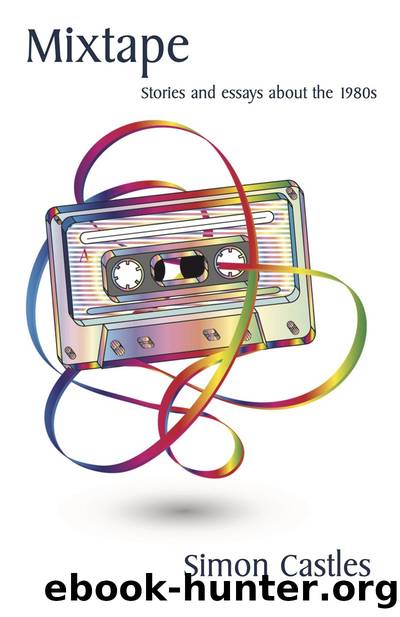
Author:Simon Castles [Castles, Simon]
Language: eng
Format: epub
ISBN: 9781761095146
Publisher: Ginninderra Press
FAMINE AND FAME
The song seemed an anomaly. Or a moral corrective in a time that needed one. In the middle of the â80s, a decade remembered for ostentation, selfishness and greed, a song called âDo They Know Itâs Christmas?â was released by a pop star supergroup calling itself Band Aid. It wasnât much of a track â even its writers admitted that, while Morrissey called it âdaily torture on the people of Englandâ â but it made an appeal to our common humanity. Think of others this Christmas.
The appeal was heard, even if the song, which was impossible to escape in the weeks before Christmas 1984, quickly began to grate. Over and over it played, on radio and (the then-booming) music television. It was like permanent background noise, part of the ether, a relentless poke at the conscience, as we in the West threw turkeys and hams and mince pies into trolleys, and children stamped their feet for Cabbage Patch Kids and Ewoks.
The song was an incredible success â at the time, the best-selling single in British chart history. The record sold faster than it could be produced, went to number one around the world, raised millions of dollars for famine relief in Ethiopia, and set in motion a movement that would lead, only months later, to Live Aid, the most famous charity concert in history.
But more than just a big hit, âDo They Know Itâs Christmas?â was also, according to Bob Geldof, the crotchety Irishman behind it, a symbol of people rejecting the selfish values of the â80s. âIt was all of us saying to ourselves, âWeâre not thatâ,â he said. âWeâre not all wearing red braces and driving Porsches with loads of money. Weâre not. There are other values that this planet has and that we hold dear as individuals.â
It was an appealing idea, and perhaps partly true. In a decade in which the people of the West were encouraged â via the triumphs of Thatcherism and Reaganism â to put the self and ambition above old ideas of society and solidarity, the opportunity for a hardened populace to show a semblance of unity and compassion was probably welcome.
But if the song appeared from a certain perspective to run counter to the prevailing ideology and spirit of the time, seen another way it was perfectly in keeping with it. Thatâs why it worked so well. The song, and the story behind it, encapsulated a lot that was true about the â80s (and the decadeâs legacy), including the cultural and political conservatism, the distrust of government to solve anything, the growing faith in celebrity, the depoliticisation of poverty, and the rejection of the last vestiges of â60s progressivism and â70s punk for a sharply-dressed, free-market pragmatism.
Bob Geldof was a fading rock star in 1984. His band the Boomtown Rats couldnât land a hit to save themselves, with the charts in England (and indeed America and Australia, where a second British invasion seemed under way) dominated by New Romantic acts such as Duran Duran and Spandau Ballet.
Download
This site does not store any files on its server. We only index and link to content provided by other sites. Please contact the content providers to delete copyright contents if any and email us, we'll remove relevant links or contents immediately.
In Control (The City Series) by Crystal Serowka(36205)
The Wolf Sea (The Oathsworn Series, Book 2) by Low Robert(35222)
We Ride Upon Sticks by Quan Barry(34503)
Crowbone (The Oathsworn Series, Book 5) by Low Robert(33596)
The Book of Dreams (Saxon Series) by Severin Tim(33357)
The Daughters of Foxcote Manor by Eve Chase(23599)
Trainspotting by Irvine Welsh(21626)
Call Me by Your Name by André Aciman(20478)
The Secret History by Donna Tartt(19012)
Shot Through The Heart (Supernature Book 1) by Edwin James(18906)
All the Missing Girls by Megan Miranda(15912)
American King (New Camelot #3) by Sierra Simone(15773)
The Girl from the Opera House by Nancy Carson(15766)
Pimp by Iceberg Slim(14473)
Sad Girls by Lang Leav(14396)
The Betrayed by Graham Heather(12806)
The Betrayed by David Hosp(12764)
4 3 2 1: A Novel by Paul Auster(12360)
Still Me by Jojo Moyes(11245)
